Be Hard to Impress
Most of us have spent way too much time
being Dazzled by way too little.

I would like women to be harder to impress and easier to delight.
I want us less dazzled by a man with a job and a working vocabulary for his feelings. Less grateful for opportunities that require us to abandon every pleasant thing about our lives. Less inclined to describe someone as extraordinary when what we mean is that they occasionally remember we are human.
And I would like us easier to delight with an excellent peach, a peculiar little museum, a friend who tells the whole scandalous story, or an afternoon that gets away from us in the best possible way.
I have spent enough time being impressed by the wrong things.
Endurance, for example. I used to find my own capacity to put up with things quite compelling. Look at everything I can carry. Look how little sleep I need. Look how gracefully I can explain why someone else has disappointed me again.
There is a grim satisfaction in being very good at living a life you would never deliberately choose.
People praise you for it. They call you strong. They ask how you do it all, and for a moment the recognition feels like compensation.
Then you still have to do it all tomorrow.
These days, I am more likely to admire a woman who has made some room. She has people she loves and responsibilities she takes seriously, but you can call her at three in the afternoon and discover she is sitting outside reading something filthy or fascinating. She might be unavailable because she is helping a friend. She might be unavailable because she has gone swimming.
She does not give you a different level of apology depending on which it is.
I find that impressive.
Somewhere along the way, many of us learned that having standards made us difficult, while having needs made us burdensome. We became skilled at appreciating whatever was offered, often before we had even asked ourselves whether we wanted it.
We could find the redeeming quality in almost anything.
The dinner was unpleasant, but they went to so much trouble. The relationship was lonely, but he was under pressure. The work consumed our lives, but we were fortunate to have it. The room was cold, the chair was uncomfortable, and we stayed for another two hours because leaving might seem rude.
A woman can become so practiced at making the best of things that she loses the habit of choosing things she actually likes.
Eventually, someone asks what she wants, and she needs a minute.
Perhaps several years.
Developing a taste for your own life takes practice. You have to notice your responses before you rush in to improve them. You have to admit that the perfectly respectable thing everyone else enjoys leaves you cold. You have to risk loving something your friends find ridiculous.
You might discover that you hate big parties and love having six people around your table until midnight. Or that you have been calling yourself a homebody when you are actually bored out of your mind and would like to go somewhere you cannot pronounce the menu.
You may want brighter clothes, more privacy, better conversation, less conversation, a lover, a separate bedroom, or something on the calendar that makes you feel deliciously nervous.
These are useful things to know about yourself.
They can also be inconvenient. Once you admit you prefer a certain kind of life, you begin noticing where you keep agreeing to another one.
That is where discernment starts costing you something.
You turn down an invitation without a competing obligation to make your refusal respectable. You stop pursuing the friendship that runs entirely on your willingness to make the plans. You admit that an impressive opportunity would make your actual Tuesday miserable.
Someone may think you have changed.
You probably have. You have gathered information.
I want to be careful here, because a taste for your own life can easily get repackaged as another expensive assignment. Suddenly, you are supposed to own the right linen, visit the right coast, and have very firm opinions about olive oil.
I enjoy a beautiful hotel as much as the next woman. Possibly more. But I have had deeply unsatisfying evenings in expensive places and wonderful ones eating something simple at a crowded kitchen table.
Money can buy comfort, access, and time. Those are substantial advantages. Even so, a purchase cannot tell you what you enjoy. You can spend a great deal furnishing a life according to someone else’s taste.
The pleasure comes when you recognize yourself in the choice.
Perhaps you put flowers beside the door because you like seeing them when you come home. Perhaps you keep the chipped bowl because it fits perfectly in your hands. Perhaps you wear the necklace to lunch, although lunch consists of leftovers and the dogs are your only witnesses.
You get to enjoy being there.
That sounds almost embarrassingly modest until you consider how many women move through their own homes as though they are the staff.
They know what everyone eats. They know which towels are clean. They can anticipate a shortage of toothpaste three days before anyone else notices.
Ask where they most like to sit, and they may realize they usually sit wherever is left.
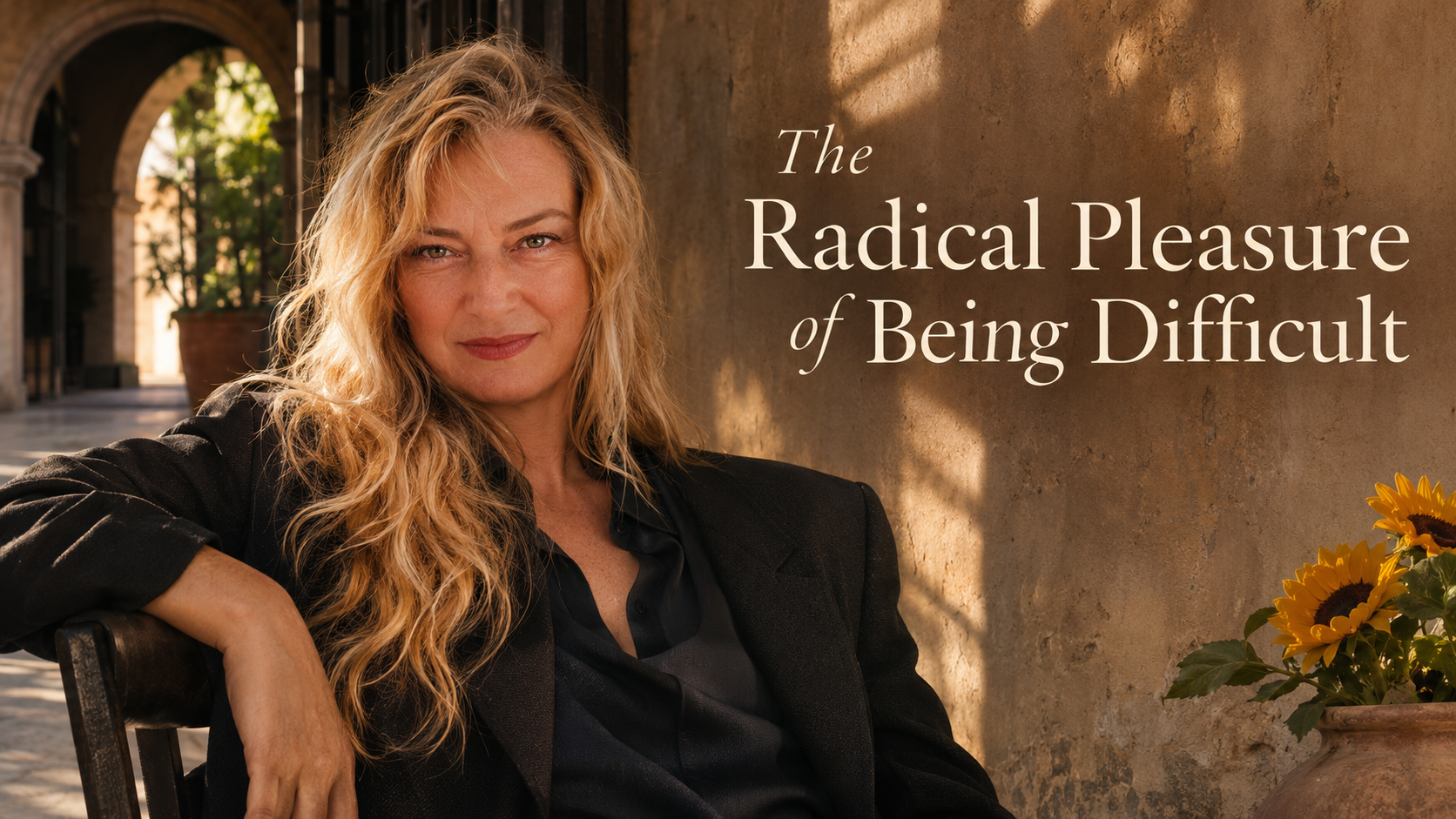
I would like that woman to claim a chair. A good one, near the light. I would like her to sit there long enough to discover what she thinks when nobody is asking her for anything.
Her standards may begin with something that small.
Over time, she may become harder to impress with praise that arrives attached to another request. She may hear “I don’t know what we would do without you” and begin to wonder whether everyone ought to find out.
She may also become easier to please in ways nobody expected. With an honest answer. With someone following through. With a meal she gets to eat while it is hot. With an invitation that makes room for her preferences instead of relying on her flexibility.
There is so much pleasure available when you stop spending all your attention explaining away discomfort.
You notice the music. You get curious about a stranger. You linger somewhere beautiful. You have enough energy left to suggest something slightly outrageous, and enough interest in your own company to enjoy yourself if nobody comes.
I want more of that for us.
I want us to develop tastes that are specific enough to guide our decisions. I want us to know the difference between being flattered and being well loved. I want us to be able to admire someone’s accomplishments without volunteering to live inside the wreckage of their personal life.
When something wonderful comes along, I want us available for it.
I want us to have an enthusiastic yes left in us. The kind that gets you out of the house, makes you order something unfamiliar, persuades you to stay another hour because the conversation has become too good to leave.
You are allowed to expect more from the life you spend your days maintaining.
You are also allowed to enjoy it before you have finished making improvements.
Pull your chair into the light. See how you like it there.
This is the work.