Turning Away from Suffering Isn’t Spiritual—It’s Privileged Nonsense
Suffering is not a failure
Suffering is not a failure.
Suffering is a constant undercurrent in life, a shadow that touches us all. It arrives uninvited, sometimes like a storm, sometimes like a slow, creeping fog.
It's easy to believe the only way to survive is to harden, to turn cold, to shut down the heart in order to protect it. But there is another way - a more rebellious, radical way. A way that allows you to feel it all, to hold suffering in your hands, but never let it steal your humanity.
You see, pain doesn't break us. What breaks us is the belief that we must run from it, that to feel it fully will swallow us whole. But here's the truth: the human spirit is a vast vessel. There's room for pain, for grief, for loss—without losing yourself in the abyss. You can witness suffering, your own and the world's, without shutting down. You can feel it fully, and still remain intact.
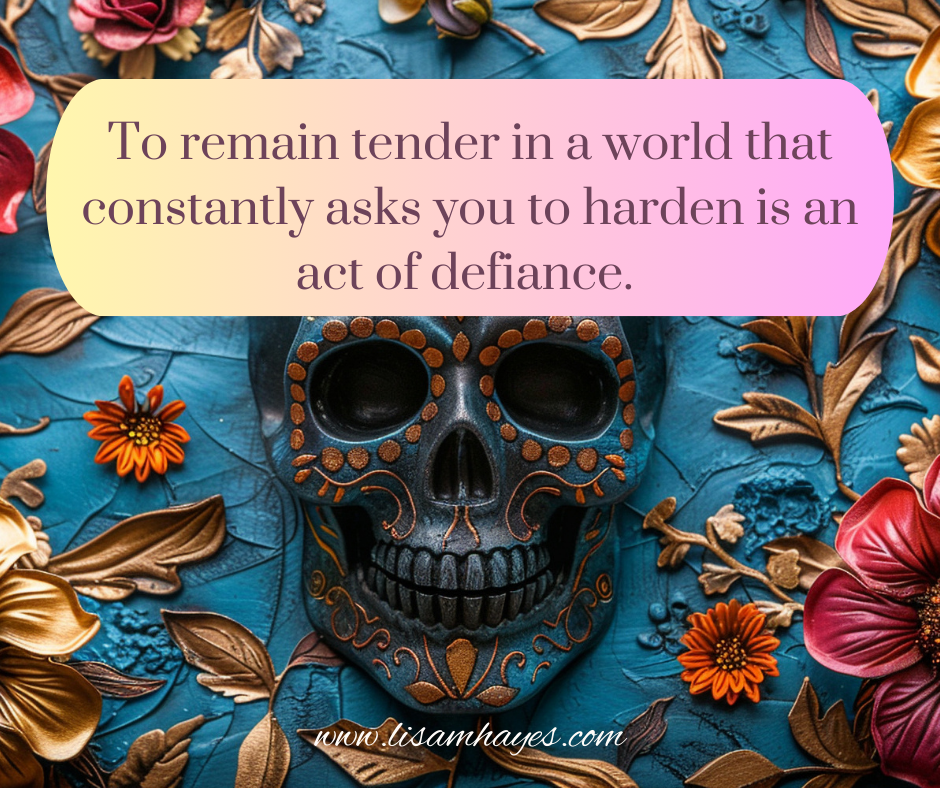
There is no strength in numbness. The real strength is in staying soft, staying open, even when everything in you wants to build walls. It's the softness that keeps you human. To remain tender in a world that constantly asks you to harden is an act of defiance. To feel when it would be easier not to is the ultimate rebellion.
And yet, we are told not to focus on the things we don't want. We are sold the lie that the spiritual path is one of turning away, of closing our eyes to the suffering around us in the name of "higher vibration." But this so-called spirituality is nothing more than disconnection in disguise.
Spirituality that teaches you to look away from the world's pain is no spirituality at all—it is privilege wrapped in false light. It is a product of white supremacy culture, a culture that can afford to turn its gaze away from suffering because it is protected by the walls of privilege. To "not focus on what you don't want" is not enlightenment—it's a luxury many do not have.
Real spirituality is rooted in your humanity. It is the willingness to stay present, to feel the full spectrum of human emotion, and to engage with the world's pain instead of turning away from it. True spirituality doesn't ask you to bypass suffering—it asks you to hold it, to honor it, and to remain whole in the face of it.
The "look away" strategy doesn't elevate your soul; it dulls it. It numbs the senses of your spirit, closing your heart to the very thing that makes you human—your capacity for compassion, empathy, and connection.
We are taught to fear the depths of our emotions—as if we'll drown in them. But the truth is, feelings are like waves: they rise, they crash, and they fall away. It's not the feeling that will undo you, it's the refusal to let yourself feel.
Grief will not break you. Rage will not consume you. Fear will not undo the essence of who you are, unless you refuse to let them pass through.
Emotions are energy in motion—meant to move, to be felt, and then to leave. They don't define you, they don't own you. Let them come. Let them go. Embracing this truth liberates you from the fear of your own emotions.
And then there's the temptation to turn away. To close your eyes, to shut down in the face of so much pain—yours, others', the world's. But that too is a kind of death. When you shut down, you cut yourself off from the world, from connection, from your own aliveness.
The walls you build to keep out the pain will keep out the beauty, too. The same heart that feels grief is the heart that feels joy. The same spirit that holds sorrow is the spirit that holds love. To stay open in the face of suffering is to remember this: you are vast enough to hold both. You don't have to choose.
Yes, there is suffering in the world. Yes, there is grief and devastation, and it feels unbearable at times. But do not let that close you. Do not let it harden your heart. You can witness it. You can feel it. You can cry for it, scream for it, break open for it—but don't let it steal your humanity. That's what the world needs most—your humanity, your empathy, your willingness to stay soft when everything around you asks you to shut down.
Suffering is not something to run from. It is not something to numb. It is not something to fix. It is something to witness, something to hold, something to survive without losing the core of who you are. Let yourself feel, let yourself stay open, because when the storm passes—and it will pass—you will still be standing.
In a world that teaches you to shut down, to harden, to run away from your pain, staying open is the bravest thing you can do. It is in the openness, in the willingness to feel deeply and fully, that you remain whole.
It is in the softness that you stay human. Do not be afraid of your tenderness. Do not be afraid of the pain. Do not feel shame in your anger. You are vast enough to hold it, and still stay standing.
I want to talk about the pain that keeps you awake at night—the suffering that you feel in your bones, whether it’s your own or the weight of the world around you. I want to unpack the grief, the anger, the heaviness that’s dimmed your shine and help you find a way to stay open, to stay human, without shutting down.
I’m not here to fix you because I don’t think you’re broken. I’m here to help you find your way through the suffering, to feel it fully and come out on the other side still in love with yourself and your life. No mood shaming, no gaslighting—just real, transformative coaching from someone who’s been through it and knows what it’s like.
Ready to stay soft, stay human, and find your strength in the process? DM me or you can find me online at www.lisamhayes.com Let’s talk about it.
You can also find me at www.thecoachingguild.com if you’re interested in coach training.